A
commercial entrance does more than welcome, it positions. Before a visitor steps inside a hotel lobby, a corporate campus, or a retail destination, the forecourt has already communicated something about the brand that occupies it. Large planters, when chosen with intention, are one of the most effective tools available to make that first impression count.
The challenge for most specifiers, facilities managers, and interior designers is knowing exactly what “large” means in context and understanding how material, form, and finish interact with the specific demands of a high-traffic commercial environment. A planter that photographs well at a residential scale can look entirely inadequate flanking a wide commercial entrance. Getting this right requires thinking across aesthetics, durability, maintenance and space planning simultaneously.
This guide covers the decisions that matter most when specifying large planters for commercial entrances from scale and silhouette to finish selection and long-term performance. Every recommendation in this post is grounded in 26+ years of experience supplying premium polymer planters to leading businesses across India.
Understanding Scale - Why Most Commercial Entrances Are Under-Planted
The instinct to play it safe with planter sizing is understandable, but it consistently produces underwhelming results in commercial settings. A planter that works well in a private terrace or studio can disappear entirely when placed against a double-height glazed façade or a wide paved forecourt.
For primary commercial entrances, a minimum pot width of 500–600mm is a sensible starting point. For prestige projects hotel drop-offs, headquarters buildings, premium retail scale up to 800mm or beyond. The planter needs sufficient visual mass to anchor the entrance and hold its own against the architecture.
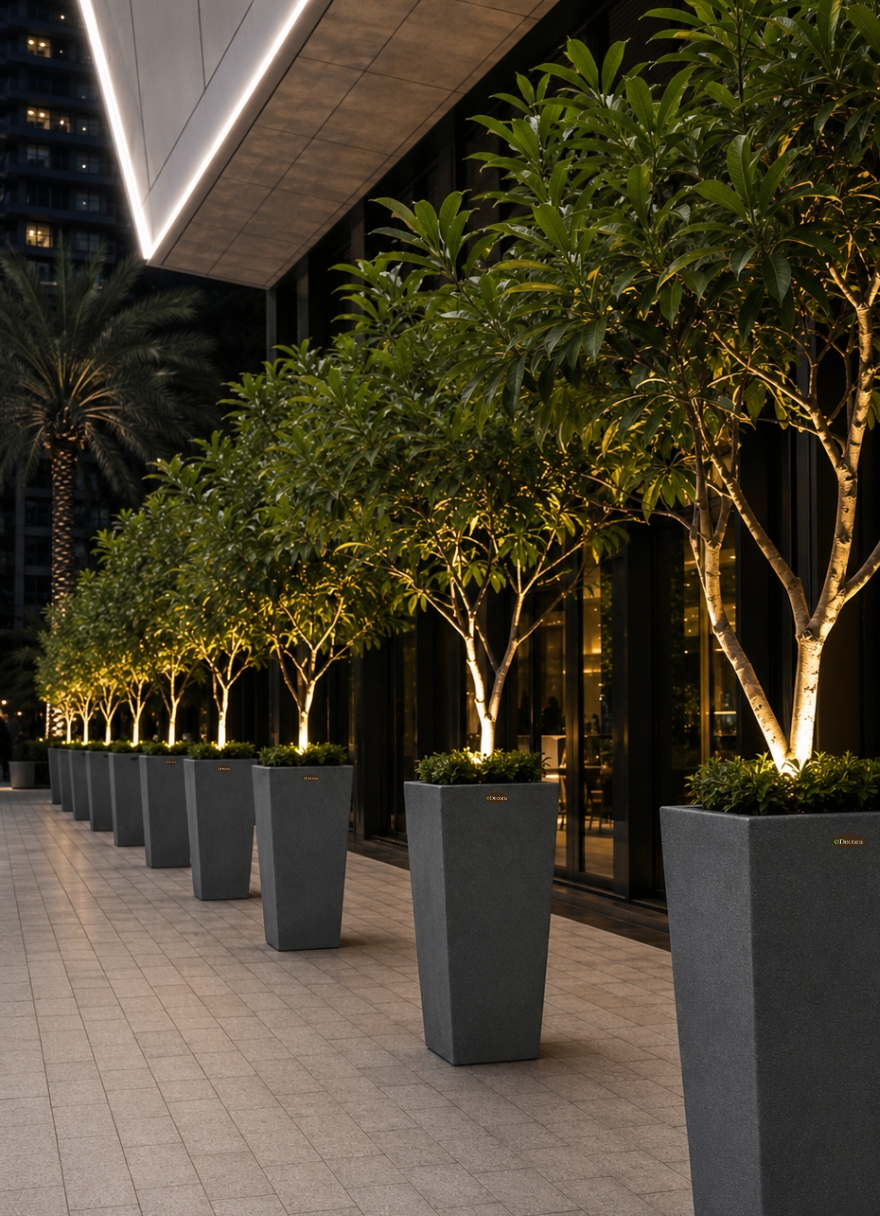
Height matters as much as width. Tall, column-style planters or elevated bowl profiles draw the eye and create a sense of arrival. Low, wide planters read as ground-level softscaping effective as secondary elements but rarely sufficient as a statement piece at a main entrance. When in doubt, go larger: an oversized planter always reads better in situ than it does in a site plan.
Decora’s range of large commercial planters is proportioned with exactly these environments in mind from glossy high-impact pieces that anchor hotel and retail entrances to restrained matt profiles suited to corporate campuses and institutional settings.
Glossy or Matt - Choosing the Right Finish for Your Entrance Context
Finish selection is one of the most consequential decisions in planter specification, and it’s frequently treated as an afterthought. The finish doesn’t just affect how the planter looks, it determines how it interacts with light, how it reads against surrounding materials, and how it ages in a high-footfall environment.
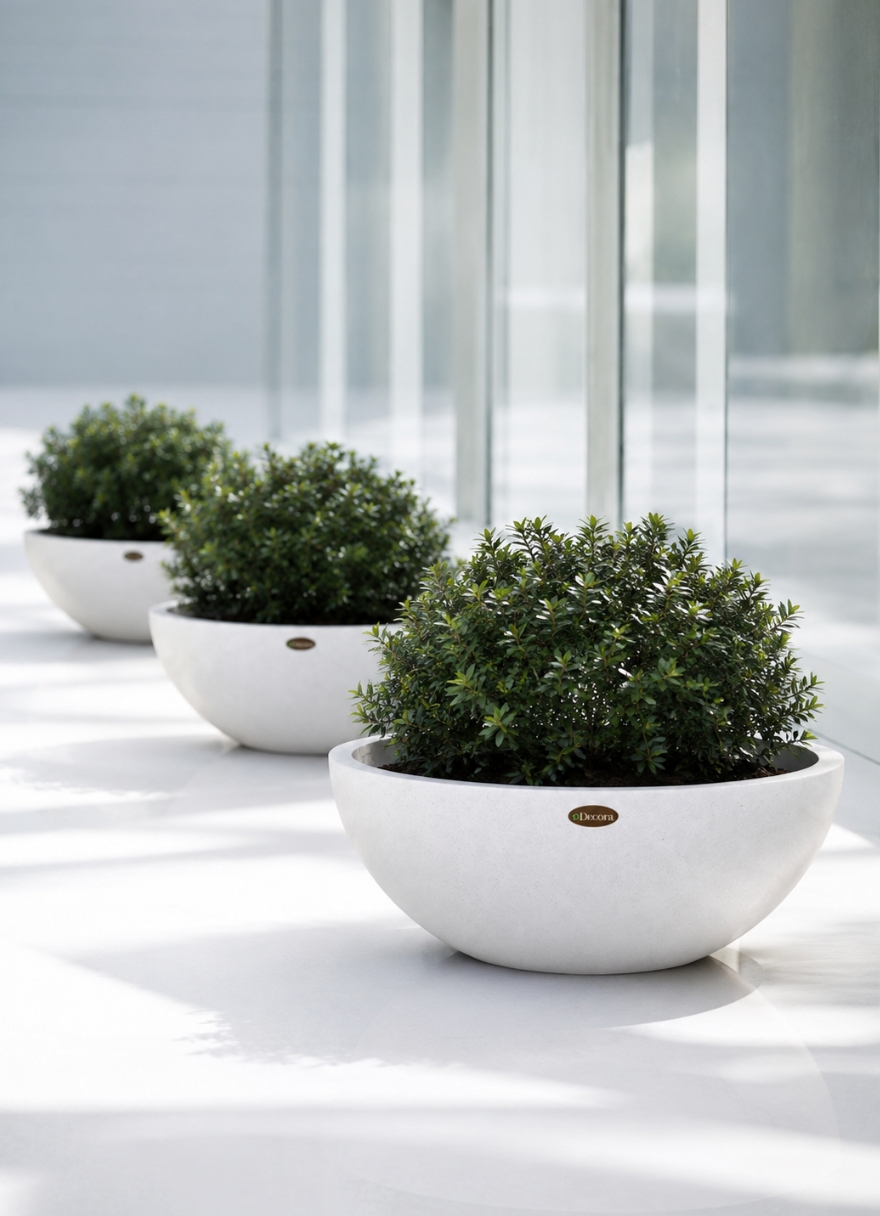
Decora’s Glossy Pots introduce a polished, high-sheen surface that elevates the presence of both the plant and the setting around it. The reflective finish interacts with natural and artificial light to create depth, which makes it particularly effective in entrance contexts where impact is the primary objective. At a hotel porch, a retail front, or a premium mixed-use building, glossy planters signal quality and finish in a way that matte surfaces rarely do. The clean silhouettes and balanced geometry of the glossy collection allow it to integrate across both interior atrium entries and open exterior forecourts.
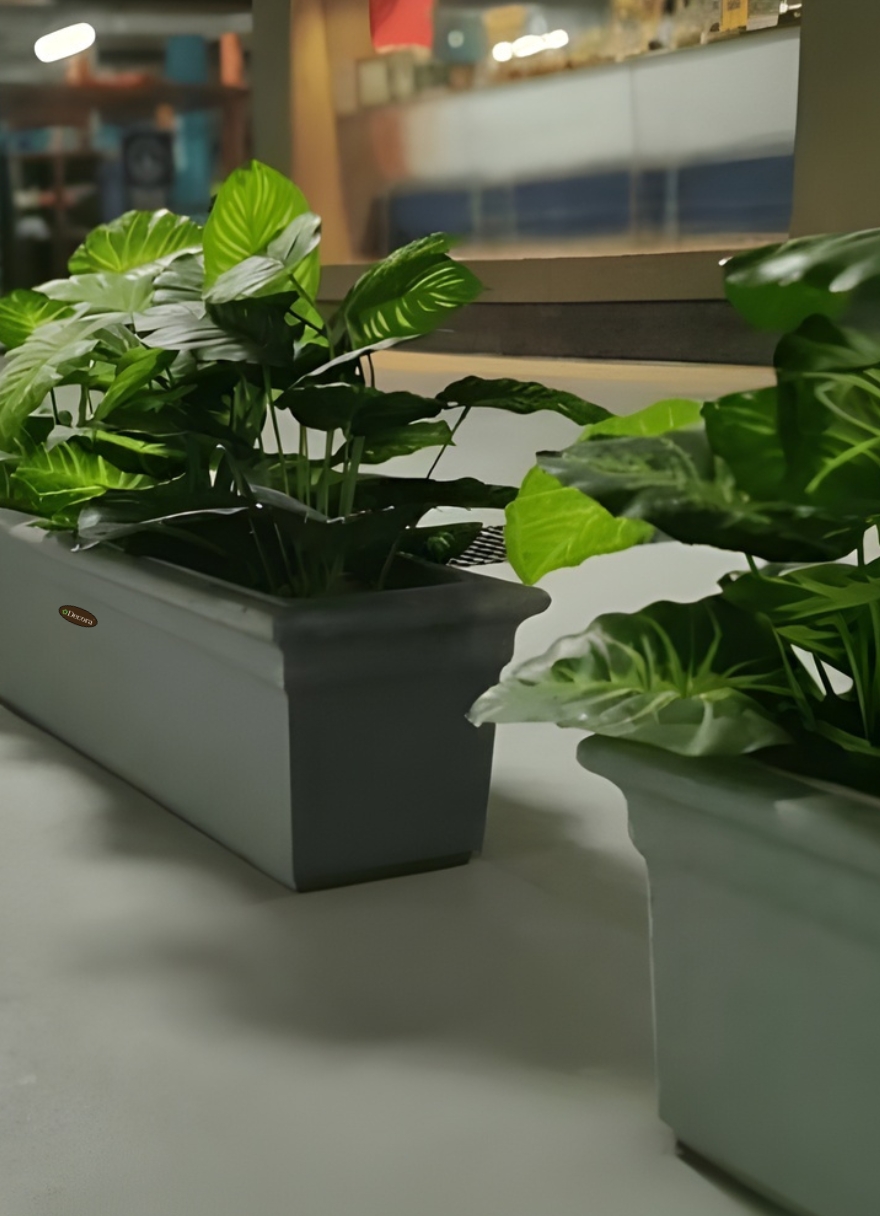
Decora’s Matt Pots offer a quieter, more grounded presence. The non-reflective surface absorbs light and lets the natural form of the planting take focus making them the right choice for corporate campuses, healthcare facilities, institutional buildings, and any context where the design brief calls for restraint over statement. Matt finishes also tend to read better in outdoor settings with strong directional sunlight, where a high-gloss surface might create unwanted glare.
For mixed-use developments or large entrance plazas, combining both finishes, glossy planters flanking the main entrance, matt pots in secondary positions or along walkways creates a considered hierarchy without introducing visual clutter.
Why Polymer Planters Outperform Alternatives in Commercial Settings
Material selection for commercial entrance planters directly affects maintenance burden, total cost of ownership, and consistency of appearance over a five-to-ten year lifecycle. In the Indian commercial context specifically where temperature ranges, monsoon humidity, UV exposure and heavy daily footfall all apply simultaneously material choice is not a detail to be delegated.
Decora’s planters are engineered from premium polymer, and the performance advantages over concrete, terracotta and low-grade resin alternatives are significant in practice:
Break-resistance matters in high-footfall settings where incidental contact from trolleys, vehicles, or maintenance equipment is unavoidable. Polymer constructions absorb impact rather than cracking under it, which is a meaningful difference in total lifecycle cost.
Lightweight construction simplifies installation and future repositioning relevant for commercial clients whose entrances are periodically refreshed as part of brand updates or seasonal programming. Moving a concrete planter of comparable size requires machinery; moving a Decora polymer planter does not.
Non-fading finishes are critical in outdoor commercial settings where UV exposure is sustained and consistent. Decora’s high-quality finishes retain their colour and surface quality over time, which means the entrance continues to look as intentional at year three as it did at installation.
Zero maintenance is not a marketing claim, it is a specification requirement for commercial facilities teams who are managing dozens or hundreds of planters across a single development. No sealing, no repainting, no seasonal treatment.
Low water absorption prevents moisture damage from sustained irrigation or monsoon exposure, a common failure point for terracotta and certain concrete blends in Indian climates.
For facilities managers and procurement leads who are comparing options on total cost rather than unit cost, polymer consistently performs better across a commercial asset’s lifecycle.
Placement Strategy - Making Large Planters Work Architecturally
Choosing the right planter is only half the brief. Placement determines whether the result reads as a designed decision or a display of product.
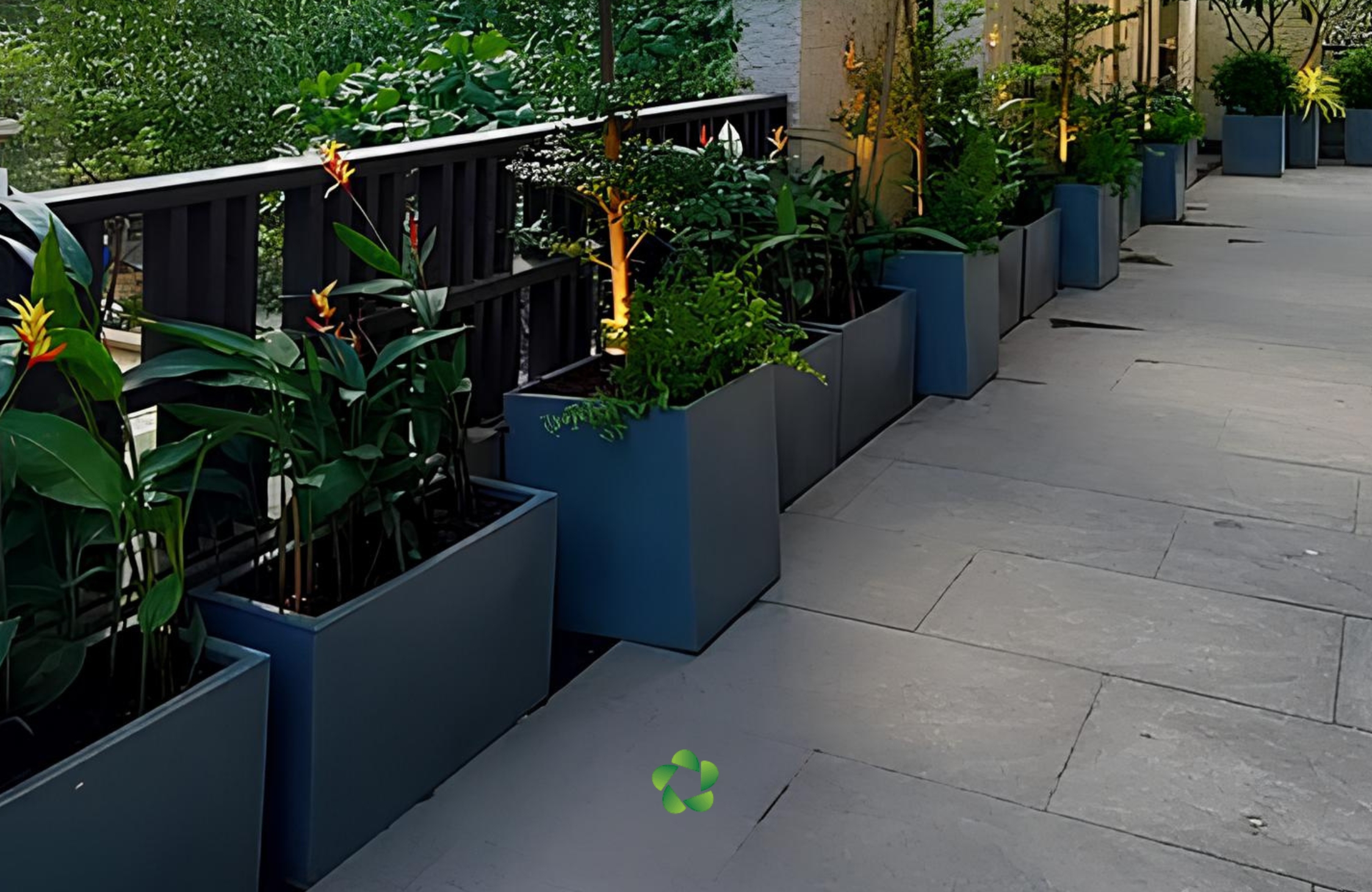
Symmetrical flanking – a matched pair of large planters on either side of a principal entrance is the most reliable placement for formal commercial contexts: hotels, corporate headquarters, banks, and institutional buildings. It creates structure, frames the entrance and signals that the space has been designed with care.
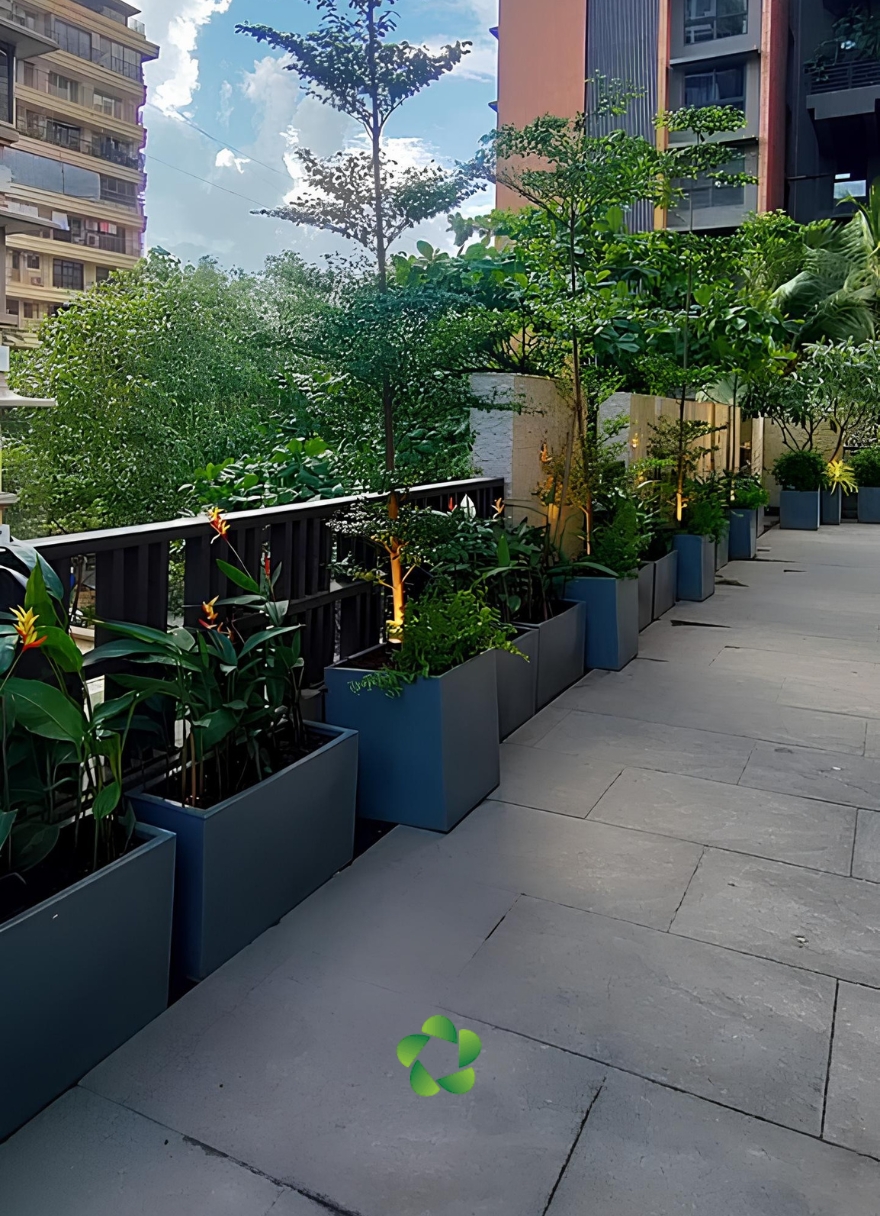
Clustered asymmetric groupings work better for retail, hospitality, and mixed-use contexts where the entrance experience is intended to feel curated rather than formal. Varying heights within a grouping using one tall planter alongside two at medium height, for example creates visual rhythm without disorder.
Wayfinding and boundary definition are underused applications for large planters in commercial settings. A run of tall, consistent planters along a pedestrian approach can define a route, create enclosure and soften a hard-landscaped forecourt simultaneously. This is particularly effective in large commercial developments where the entrance is set back from the street.
For any placement involving elevated surfaces, podium decks or basement roof slabs, always confirm structural load capacity with the project engineer before finalising planter selection. Decora’s lightweight polymer construction significantly reduces load compared with concrete or stone alternatives of equivalent visual scale – an advantage that is frequently decisive on constrained structures.
Browse real installation references across commercial and hospitality projects in our project gallery.
Planting Choices That Complement Large Commercial Planters
The planter provides the frame; the planting provides the life. For commercial entrances, planting selection should prioritise year-round structural presence, low maintenance requirements and resilience to variable care regimes.
In the Indian commercial context, the following plant types consistently perform well in large entrance planters:
Structural foliage plants – Ficus Lyrata (Fiddle Leaf Fig), Dracaena Marginata, Areca Palm, and Bird of Paradise, provide height, architectural form and strong visual presence throughout the year. They hold their form without seasonal replacement and are well-suited to the deep root volumes that Decora’s larger pots accommodate.
Topiary and clipped forms – maintained Ficus, clipped Buxus alternatives suited to Indian climates, and spiral-trained standards work particularly well with the clean geometry of Decora’s glossy pot collection, where the precision of the plant form echoes the precision of the planter profile.
Specimen trees in oversized planters – multi-stem varieties or ornamental standards – add canopy, scale, and shade to open forecourts while maintaining a designed rather than planted appearance.
The key rule: always confirm that the selected planter’s internal depth accommodates the root ball of the intended plant at maturity, not at the point of installation. A planter that fits the plant on day one may constrain it by year two.
What to Look for When Specifying a Commercial Planter Supplier
For large commercial entrance projects where quality, consistency, and delivery reliability directly affect the project, programme supplier selection is as important as product selection.
The questions worth asking before committing:
Can they supply at scale and maintain finish consistency across a large order? For commercial projects requiring multiple matching planters, colour and finish variation across a batch is a real risk with smaller or less controlled production operations. Decora’s world-class manufacturing facility near Mumbai is built for precisely this level of consistency.
What is the lead time, and does it align with the project programme? Confirm this before design sign-off, not after.
Is the product technically documented? Weight, dimensions, drainage configuration, UV ratings, and material specification should be available without needing to chase. Decora provides full product information to support specification and procurement decisions.
Do they have a relevant track record? 26+ years of supplying premium planters to leading businesses across India means Decora has been specified on projects ranging from boutique hospitality to large-scale commercial developments. That breadth of experience shows in the product and in how the team supports the specification process from enquiry through to delivery.
Specifying planters for a commercial entrance project?
Decora by Intermolde works directly with architects, interior designers, landscape consultants and procurement teams across India from initial brief through to delivery.