
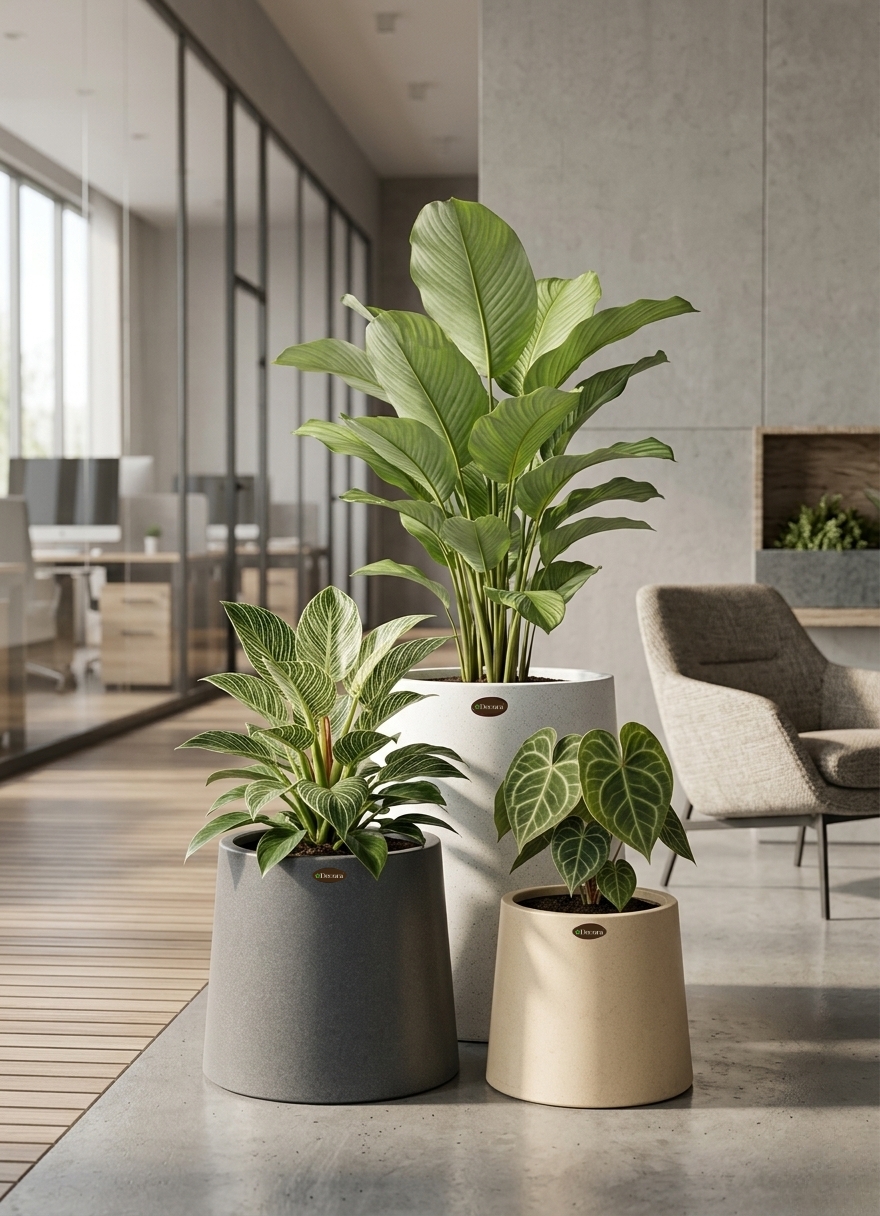
There’s something quietly transformative about a well-placed planter. It doesn’t just hold a plant, it frames it, elevates it, and makes a statement about the space it lives in. Whether you’re dressing up a sun-drenched living room corner, breathing life into a corporate lobby, or adding a green accent to a compact desk setup, the planter you choose matters just as much as the plant inside it. At DECORA, we believe great spaces are built on intentional choices, and choosing the right planter is one of the most rewarding ones you’ll make.
Start With the Space, Not the Plant
The most common mistake people make when buying planters is picking one they love in isolation, without thinking about where it’s actually going. Before anything else, read the room. Is the space airy and minimal with clean lines and neutral tones? You’ll want planters that echo that restraint, think matte white, concrete-finish, or simple terracotta. Is it a warm, layered space with rich textures and eclectic furnishings? That’s your invitation to go bold with sculptural forms, earthy glazes, or woven baskets.
For office environments, the calculus shifts slightly. You want planters that project professionalism without feeling sterile. Sleek geometric shapes in subdued tones, charcoal, deep olive, or brushed stone, integrate seamlessly into professional settings. A cluster of small planters along a window ledge, or a single tall statement planter near an entrance, can dramatically improve both aesthetics and the overall energy of the workspace.
Match the Material to the Environment
Material is everything; it affects how a planter looks, how it functions, and how long it lasts. Here’s a breakdown of the most popular options and where they shine:
- Terracotta & Ceramic: Timeless and breathable, these are ideal for plants that need good drainage and airflow. Succulents, herbs, and flowering plants thrive in them. They add warmth and an artisan quality, making them perfect for homes with earthy or Mediterranean-inspired interiors. Glazed ceramic pots bring a pop of colour and work beautifully in creative office spaces.
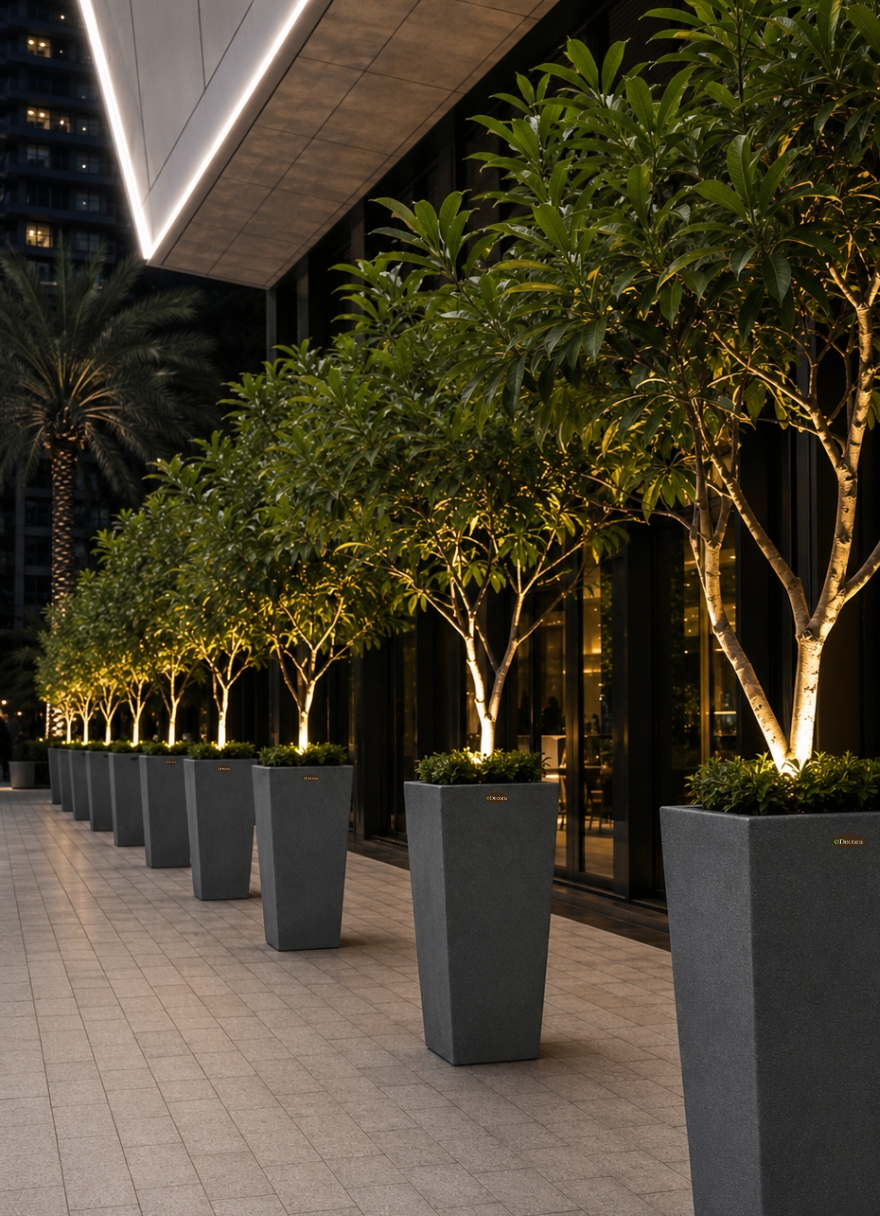
- Fibreglass & Resin: Lightweight and incredibly versatile, fibreglass planters are a go-to for large-format indoor and outdoor installations. They convincingly mimic the look of concrete, stone, or metal at a fraction of the weight, making them especially popular for corporate lobbies, rooftop gardens, and expansive living areas. Durable and weather-resistant, they’re a long-term investment worth making.
- Metal Planters: A favourite in industrial and contemporary interiors, metal planters in brass, copper, or matte black add an edge and sophistication that few materials can replicate. They work best as outer cachepots for plants that don’t need frequent watering, since metal can heat up and affect root health. Used right, they’re among the most striking choices available.
- Woven & Fabric Pots: Jute, seagrass, and fabric planters are among the most stylish and eco-conscious choices right now. They bring a natural, relaxed energy to a space and complement botanical-style or Scandinavian interiors beautifully. Ideally used as covers rather than direct planters, they keep the overall look soft and grounded.
Size and Proportion: The Rules You Should Know
A planter that’s too small makes a plant look cramped and afterthought-ish. One that’s too large drowns it entirely. The golden rule: the planter should be roughly one-third to one-half the height of the plant above the soil line. For most houseplants, your planter should be 1–2 inches wider in diameter than the current root ball, with enough room to grow, but not so much that excess soil retains water and causes root rot.
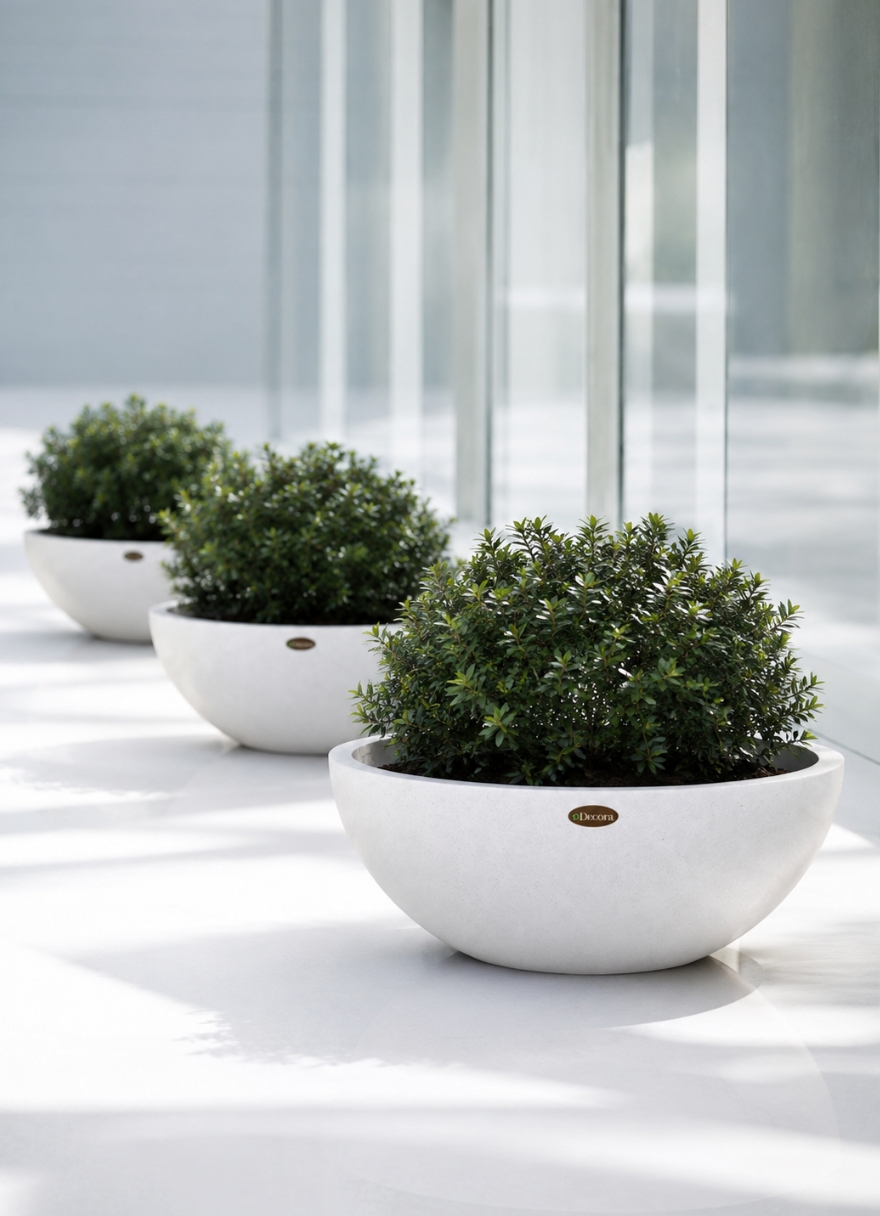
In terms of visual scale, tall narrow planters work beautifully in corners and against walls; they draw the eye upward and create a sense of height in a room. Wide, shallow planters are excellent for low-growing plants and tabletop displays. For offices with high ceilings or open-plan layouts, go big and bold, oversized planters with large-leafed plants like the Fiddle Leaf Fig or Bird of Paradise anchor the space with a quiet authority.

Drainage: Don't Skip This Step
One of the most overlooked functional considerations is drainage. Most plants hate sitting in waterlogged soil, which means drainage holes are non-negotiable if you’re planting directly in a pot. If you’ve fallen in love with a statement planter that has no drainage, use it as a cachepot — simply place your plant in a practical grow pot inside it. This gives you the best of both worlds: form and function, with none of the guesswork.
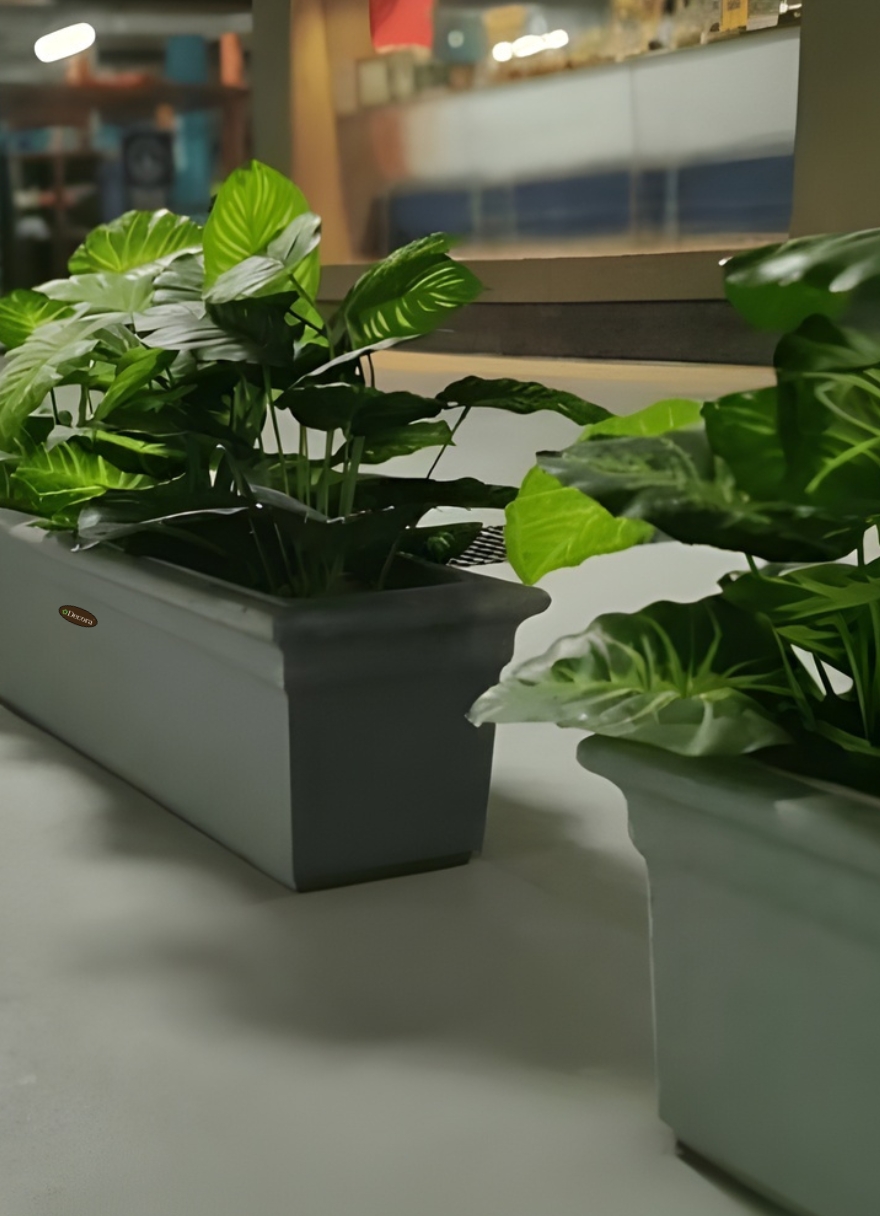
For office settings, especially, saucers or self-watering planters are a smart investment. They protect flooring, reduce maintenance, and keep the space looking tidy and professional without demanding constant attention.
Create Cohesion, Not Chaos
When styling multiple planters in one space, cohesion is key. This doesn’t mean everything has to match perfectly; a little variation actually creates visual interest. The trick is to stick to a consistent colour palette or material family while varying shapes and sizes. A trio of terracotta pots in small, medium, and large creates a beautifully unified vignette without feeling rigid. Mixing a tall ceramic planter with a small woven basket feels collected and intentional when they share similar earthy tones.
In office spaces, grouping planters in odd numbers, threes and fives, is a classic designer trick that creates natural-feeling clusters without looking staged. Place them at varying heights using plant stands or shelving to add dimension and keep the eye moving through the space.
The Right Planter Changes Everything
At DECORA, we’ve seen firsthand how a single, thoughtfully chosen planter can shift the entire energy of a room. It’s not just about aesthetics, it’s about creating spaces where people genuinely feel good. Whether you’re greening up a corner at home or curating a biophilic office environment that inspires focus and calm, the planter is your starting point.
Take your time with the selection. Consider the space, the plant, the material, and the mood you want to create — and then choose with confidence. The perfect planter isn’t just a container. It’s a design choice that grows with you.
Explore our full collection of planters at DECORA, where every space tells a story.
I look forward to seeing how these developments will improve service levels and customer satisfaction in the freight industry!
Comments are closed.